
How to Choose the Right Color Temperature for Austin's Limestone and Stucco Exteriors
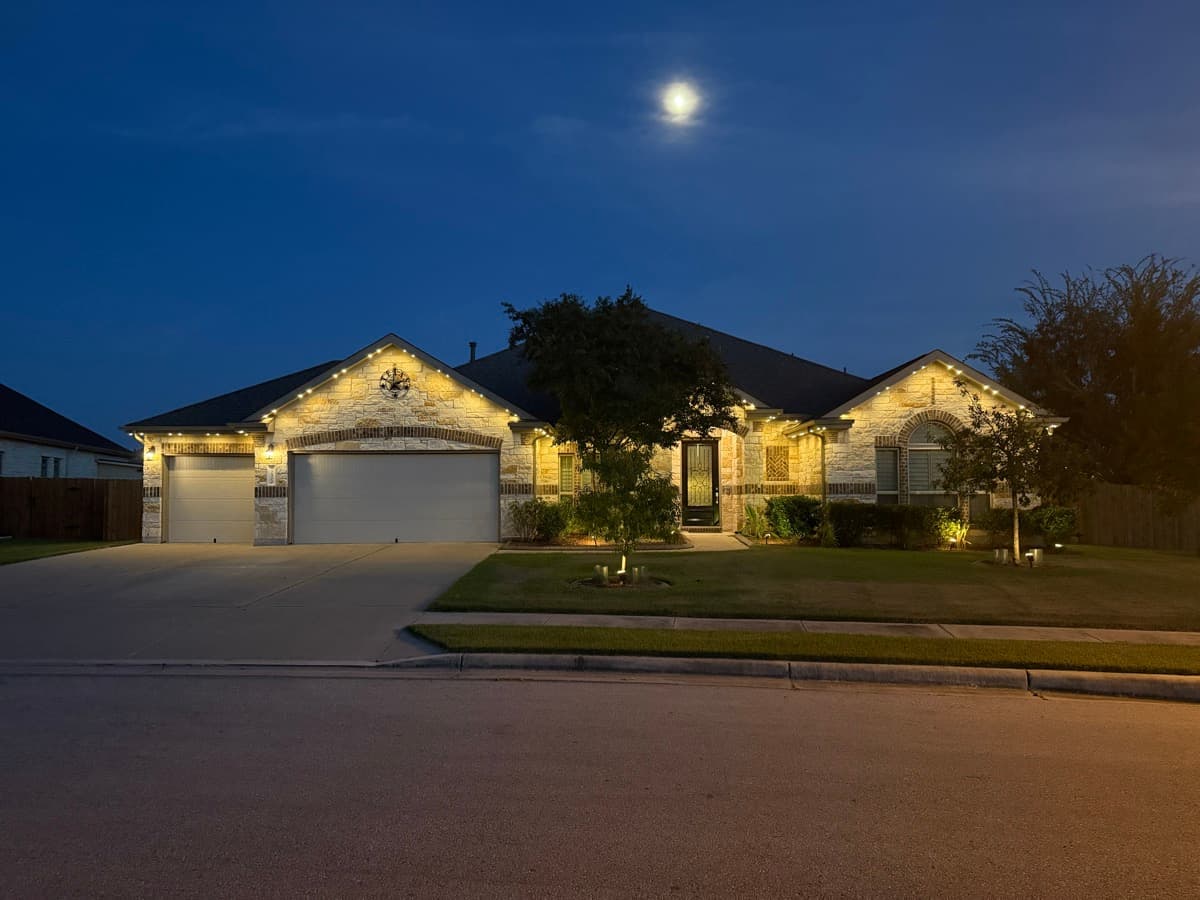
Drive through West Lake Hills or Lakeway at dusk and you'll see it on every block. Some limestone homes glow gold and look like they were carved out of warm honey. Others look chalky, blue, almost gray. The stone is the same. The architecture is the same. The only difference is the temperature of the light hitting them. On Hill Country limestone and stucco, color temperature isn't a small detail. It is the entire game.
If you own a limestone or stucco home in Austin, Kelvin matters more than most people think. The short version: ask for 2700K to 3000K for everyday light, avoid cool-white floodlight glare, and choose a system that can move between warm white, pure white, and color.
What Is Color Temperature, Really?
Color temperature is measured in Kelvin (K), and it tells you whether a bulb produces warm orange-toned light or cool blue-toned light. The lower the number, the warmer the glow. The higher the number, the cooler and more clinical it gets. The scale runs from about 1800K (candlelight) up past 6500K (overcast daylight), and every step changes how Hill Country stone looks at night.
Here are the four numbers Austin homeowners need to know:
- 2700K is candle-warm. Deep gold, soft, almost romantic. Beautiful for highlighting cedar accents and architectural features.
- 3000K is the residential sweet spot. Warm white with enough clarity that limestone reads as creamy gold instead of yellow-orange.
- 4000K is neutral white. Crisp and clean, but it starts to make warm-toned limestone look flat.
- 5000K and up is daylight or "cool white." On Texas limestone, this temperature reads as harsh, gray, and almost institutional.
For most Austin and Hill Country homes, the right answer for everyday lighting sits between 2700K and 3000K. Above 4000K, the warm gold tones in limestone get crushed into a flat, washed-out gray. The home stops looking like a Hill Country home and starts looking like a strip mall.
What Color Temperature Looks Best on Austin Limestone and Stucco?
For Hill Country limestone and most Austin stucco exteriors, warm white in the 2700K to 3000K range almost always wins. It pulls the natural gold and amber tones out of the stone, makes the cedar accents look honey-colored instead of gray, and gives the home a richer look at night than it has in midday sun. Above 4000K, the same limestone reads as cold and chalky.
Texas Hill Country limestone is creamier and more porous than the stone you see used in homes back east. During the day, the Texas sun bleaches it to a soft cream. At night under warm white, that cream tone deepens into gold. Under cool white, the same stone goes the opposite direction and looks almost gray. This is why so many Austin homeowners say their home "looks more expensive at night" once they switch to a permanent system tuned to the right warm white. The stone finally has the warm light it needs.
Why Most Permanent Lighting Brands Can't Hit True Pure White
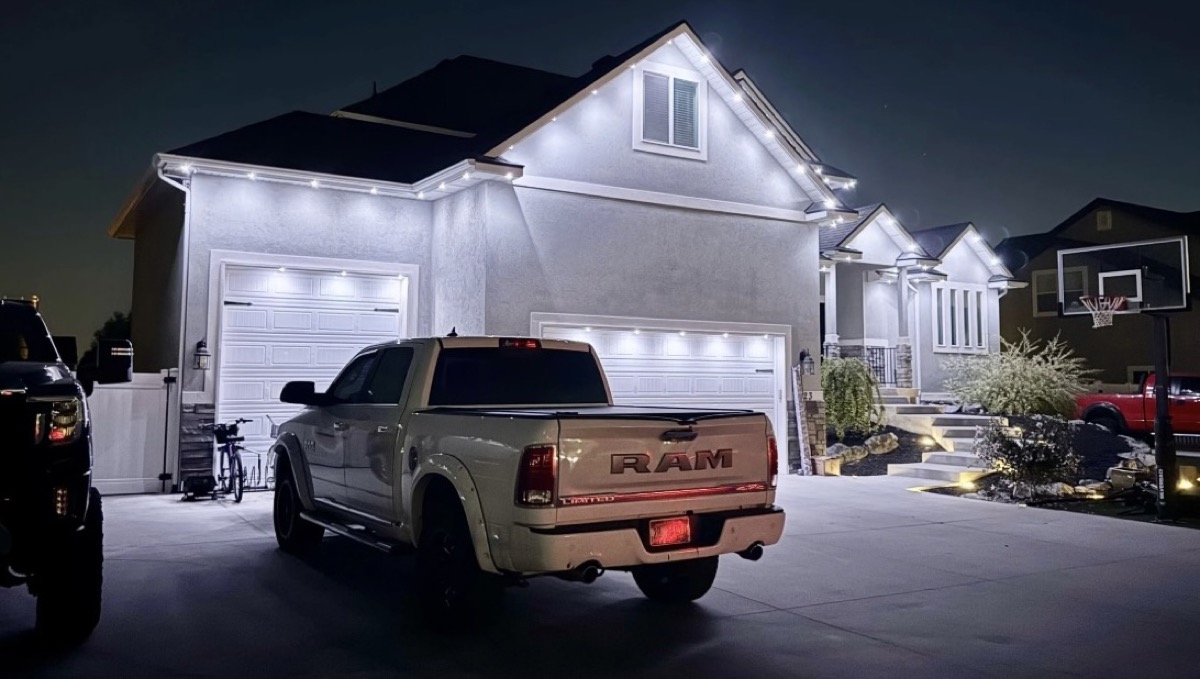
Here is something most Austin homeowners don't know until they see it side by side. A lot of permanent lighting brands use RGB-only nodes, meaning each fixture has three LEDs total: one red, one green, one blue. To produce "white," the system runs all three at full power. The result looks white-ish at first glance, but in person it skews bluish or purple, and on warm-toned limestone it reads as cold and slightly off.
TruLight uses a 6-LED node. Three RGB LEDs plus three dedicated warm-white LEDs (based on manufacturer published specifications as of April 2026). Those extra warm-white LEDs are what make cleaner neutral white possible. When you combine them with the RGB LEDs, you get a cleaner neutral white than an RGB-only system can produce, based on TruLight Austin's manufacturer specifications. On Hill Country limestone, that difference is the difference between washed-out stone and stone that still looks warm.
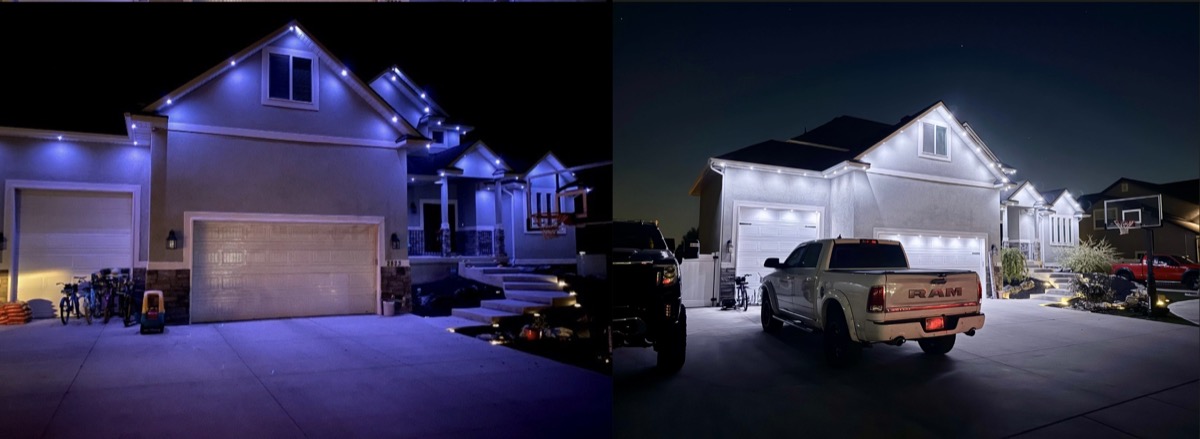
This is also why some homeowners compare systems in person before they buy. The spec sheets can look similar on paper. On limestone, the difference is easier to see. Spec sheets can look similar on paper. On limestone, the white quality is easier to judge from the driveway.
How Does Color Temperature Change the Way Your Home Looks?
The same Hill Country home can look like a completely different house at 2700K versus 4000K. At 2700K, limestone reads as warm honey, cedar accents look like deep amber, and the windows of the home feel like firelight. At 4000K, those same materials go flat and clinical. At 5000K and up, the home reads as institutional, almost like a state office building.
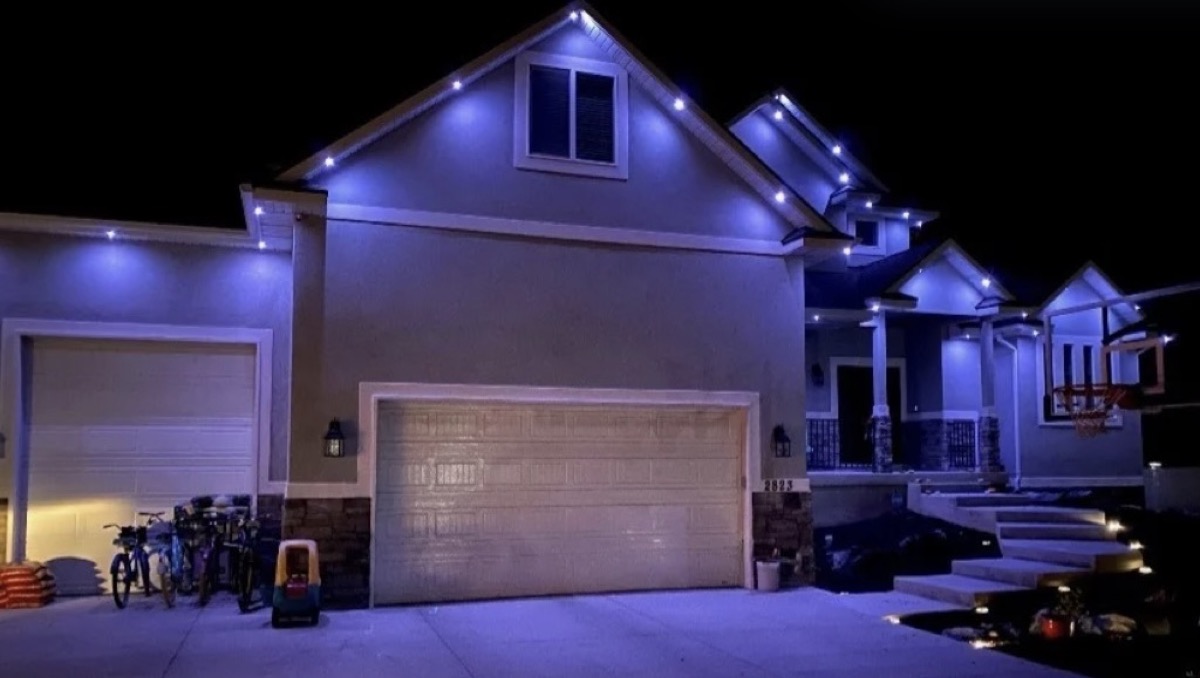
This is where RGBW is useful. Beyond the white spectrum, you can tint the entire home in any color of the rainbow. Burnt orange for Longhorns Saturdays. Red, white, and blue for the 4th of July. Purple and orange for Halloween. The trick is using color sparingly and coming back to warm white as the daily default. See how this plays out across our gallery of accent lighting projects on Austin homes.
Want to see what warm white looks like on your limestone?
What Color Temperature Should I Use Through the Texas Year?
For most Austin homes, warm white should be the daily setting. The fixtures stay on warm white from sunset until late evening for the majority of nights. Pure white kicks on for security mode or for occasions when you want the home to read crisp and modern. Holiday and game-day colors take over for events.
A practical schedule for an Austin home looks something like this. Warm white from sunset until 11pm at 60-80% brightness. Pure white triggers if motion is detected after that, lighting up the property like a security floodlight without the bluish cast that competitor RGB-only systems produce. Then back to warm white at 20% as a soft overnight presence light. Holiday colors take over for football season, the 4th, Halloween, ACL Fest weekends, F1 weekend at COTA, and Christmas. The system runs itself once it is scheduled.
Color Temperature Mistakes That Make Austin Homes Look Worse
A common mistake on Austin homes is leftover cool-white floodlights from the 90s and early 2000s. Big square halogen-replacement LED bulbs that came with the home. They blast 5000K or higher onto warm-toned limestone and stucco and turn the whole exterior gray. Replacing those with the right color temperature is the single highest-impact change most Austin homes can make at night.
The second mistake is mixing temperatures across the property. A 2700K coach light next to a 4500K floodlight next to a 3000K landscape uplight looks chaotic. Pick one primary temperature for the whole home and stick to it. The better-looking homes in West Lake Hills usually keep one consistent temperature across the property.
The third mistake is leaving holiday and event colors on for too long. Burnt orange looks great for Longhorns weekends. Christmas red and green looks great in December. By January 10th, those same colors start to look like the homeowner forgot to change them. The whole point of a permanent system is that warm white is two taps away on your phone, and the home instantly looks dialed back and elegant again.
One more: brightness. Cranking the lights to 100% all night long is too much for a residential setting. Most Austin homes look best at 60-80% warm white from sunset to midnight, then dimmed to 20-30% as a soft overnight presence. The fixtures last longer, the neighbors appreciate it, and the home reads as more refined.
How Permanent Lighting Solves the "Pick One Temperature" Problem
For decades, choosing exterior lighting in Austin meant picking one color temperature and living with it for the next decade. You bought 3000K bulbs and that was your home until something burned out. With permanent RGBW lighting, that constraint disappears. Warm white at 3000K-equivalent is the daily default. Pure white kicks on for security or when you want the home to read modern. Holiday and game-day colors handle events. All from the same fixtures, controlled from your phone.
This is the part most Austin homeowners don't fully appreciate until they live with it for a few months. It is not just a Christmas-lights replacement. It changes how your home looks every night. A backyard dinner with friends gets soft warm white at 50%. A summer night when you want the patio to feel crisp gets pure white. UT game day gets burnt orange. Halloween gets purple and orange. None of it requires anyone touching a ladder, and none of it commits you to one look forever.
Frequently Asked Questions
What color temperature is best for limestone homes?
For Texas Hill Country limestone, warm white in the 2700K to 3000K range produces the most flattering result. It brings out the natural gold and amber tones in the stone and gives the home a warmer, richer look at night. Cool white above 4000K tends to make limestone look gray and washed out, which is the opposite of what most Austin homeowners want.
What is the best LED color temperature for stucco exteriors?
Most Austin stucco exteriors look best between 2700K and 3000K, the same range that flatters limestone. Stucco picks up its undertone from the surrounding warm light, so warm white reinforces the natural cream or sand color most Hill Country stucco is dyed to. Cooler temperatures above 4000K can make stucco look chalky.
Should outdoor lights on a stone home be warm or cool white?
Warm white. For warm-toned natural stone like Texas limestone, the 2700K to 3000K range complements the stone's natural color. Cool white pulls the warmth out of the stone and makes it look gray. The only time cool white makes sense on a stone home is in pure-white security mode for a few minutes when motion is detected, then back to warm white.
What color temperature does TruLight Austin use?
TruLight Austin fixtures contain six LEDs per node. Three RGB LEDs and three dedicated warm-white LEDs. The warm-white LEDs are tuned to a residential-friendly warm temperature for everyday use, and combining them with the RGB LEDs produces true neutral pure white. You control the temperature, brightness, and color from the app, so the same fixture handles warm white, pure white, holiday color, or any custom scene.
Related Articles
Ready to see your limestone in the right light?
Color temperature is the kind of detail most Austin homeowners never think about until they see it done right on a neighbor's home. Then they can't unsee it. If your house is still under 5000K floodlights or an RGB-only system that can't hit clean white, it is worth seeing what 3000K warm white does to your limestone or stucco. We give free quotes across Austin and the Hill Country, and the difference is often obvious from the driveway once the lights are on. Call us at (512) 812-8266 or send a message and we'll come take a look.
Ready to Light Up Your Home?
Use our light preview tool to see your home in warm white, holiday colors, and more. Then get your free instant quote.
Get Your Free Quote Instantly