
The TruLight Difference
Compare Permanent Lighting Brands in Austin
Permanent lighting is a real investment, and if you're shopping in the Austin area you've probably collected quotes from more than one brand. We go brand by brand: chip type, LED count, voltage, how zones actually work, warranty, and what the app looks like two years after install. Find the brand you're considering and see exactly how it stacks up for a Central Texas home.
See the Full Breakdowns
Hands-on video comparisons covering hardware, voltage, app features, and real install differences.
TruLight vs Dazzl Lighting
Strong reviews, durability specs published, chip and voltage not
TruLight vs Gemstone
WS2811 vs UCS7604, 12V vs 48V
TruLight vs JellyFish
RGB algorithm vs true RGBW white
TruLight vs EverLight
5V/24V, ports vs true zoning
TruLight vs Trimlight
RGB only, no white, 2.9-star app
TruLight vs Bosso
12V, WS2811, 3 LEDs per node, 26 patterns
TruLight vs Celebright
24V, 1 LED per node, 17 patterns
TruLight vs Govee
DIY tape mount, 1 LED puck, 50K-hour chip, no true zones
TruLight vs Oelo
RGB only, 2 LEDs per node, 16 moving patterns, port zones
TruLight vs Astoria Lighting
Two RGBW systems: 48V vs 12V, output, warranty, and local service
What Matters When You Compare Brands in Central Texas
Austin summers are brutal on outdoor electronics. Track, lights, and controllers bake through months of triple-digit heat and intense UV, so before you sign with any brand, ask for its verified operating temperature range and UV rating in writing. Pattern counts are fun in the showroom; what decides how the system looks after a few Texas summers is build quality you can hold the installer to.
White quality deserves close attention here, too. Much of Central Texas builds in limestone, warm brick, and earth-tone stucco, and an RGB-approximated white throws a cool blue cast that fights those exteriors. A dedicated warm white LED is the difference between lighting that flatters a limestone facade and lighting that looks like a gas station.
We install across the Austin metro, including Round Rock, Cedar Park, Georgetown, and the surrounding corridor. Whichever brand you choose, get the comparison in writing: LEDs per node, real lumens, chip model, and what the warranty actually covers.
Every dealer-installed TruLight system comes with a lifetime warranty. Lifetime means the rated life of each part: 100,000 hours for the lights, five years for the control box. Read the full warranty
RGB White vs. RGBW Pure White
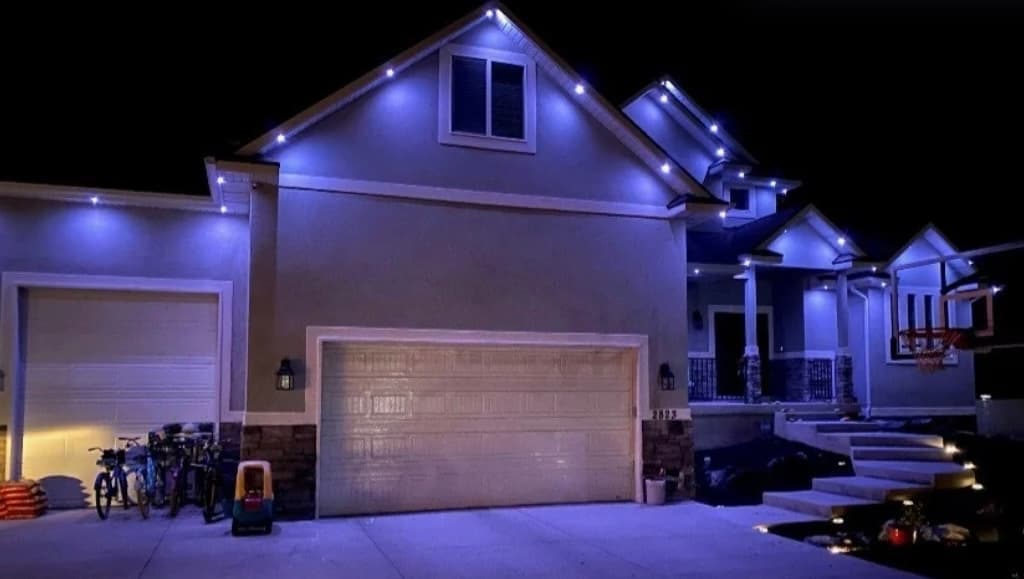
RGB “White”
Standard RGB systems mix red, green, and blue to approximate white. The result is a cool, bluish-purple tint that doesn't look natural, especially on warm-toned homes with stone, stucco, or earth-tone siding. The photo below is a JellyFish system set to white. JellyFish uses three RGB LEDs per node with no dedicated white diode, so its white is blended from color. See the full TruLight vs JellyFish comparison.
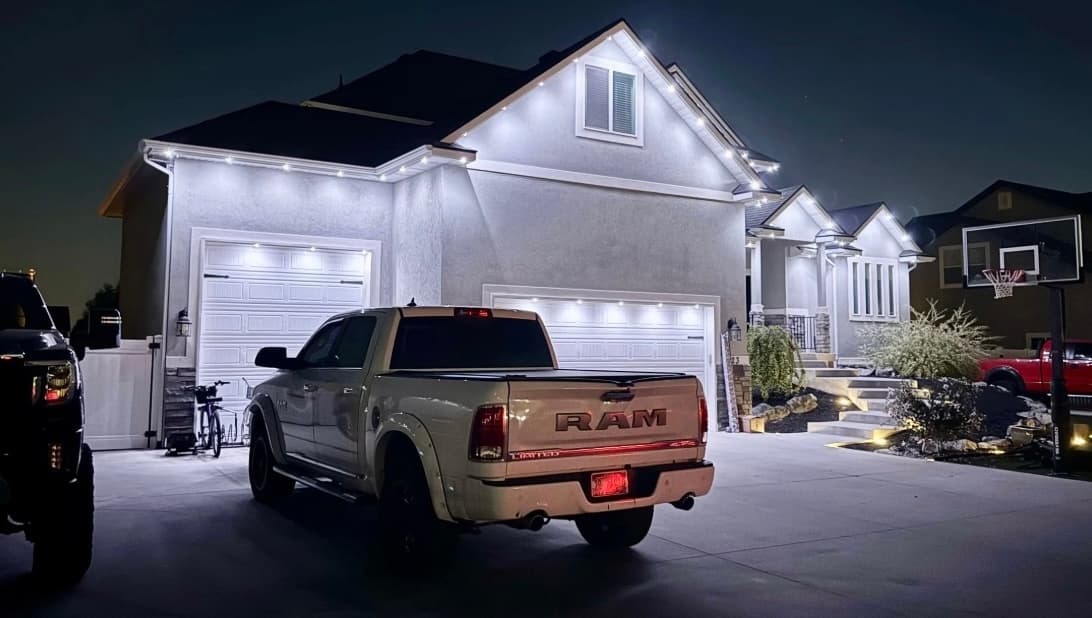
RGBW Pure White
TruLight uses 6 LEDs per light: 3 RGB + 3 dedicated warm white LEDs. This gives you two distinct white modes: a real warm white that flatters stone and stucco, and a true pure white by blending all 6 LEDs together. No RGB system can replicate this. The photo below is the same home. The owners wanted a cleaner white than RGB could give them, so the JellyFish system came down and TruLight went up.
Ready to Choose the Best?
See the difference for yourself. Use our “See Your Home with TruLight” preview to draw your roofline and see how it looks, then get your free instant quote.
Get Your Free Quote Instantly