Back to Blog
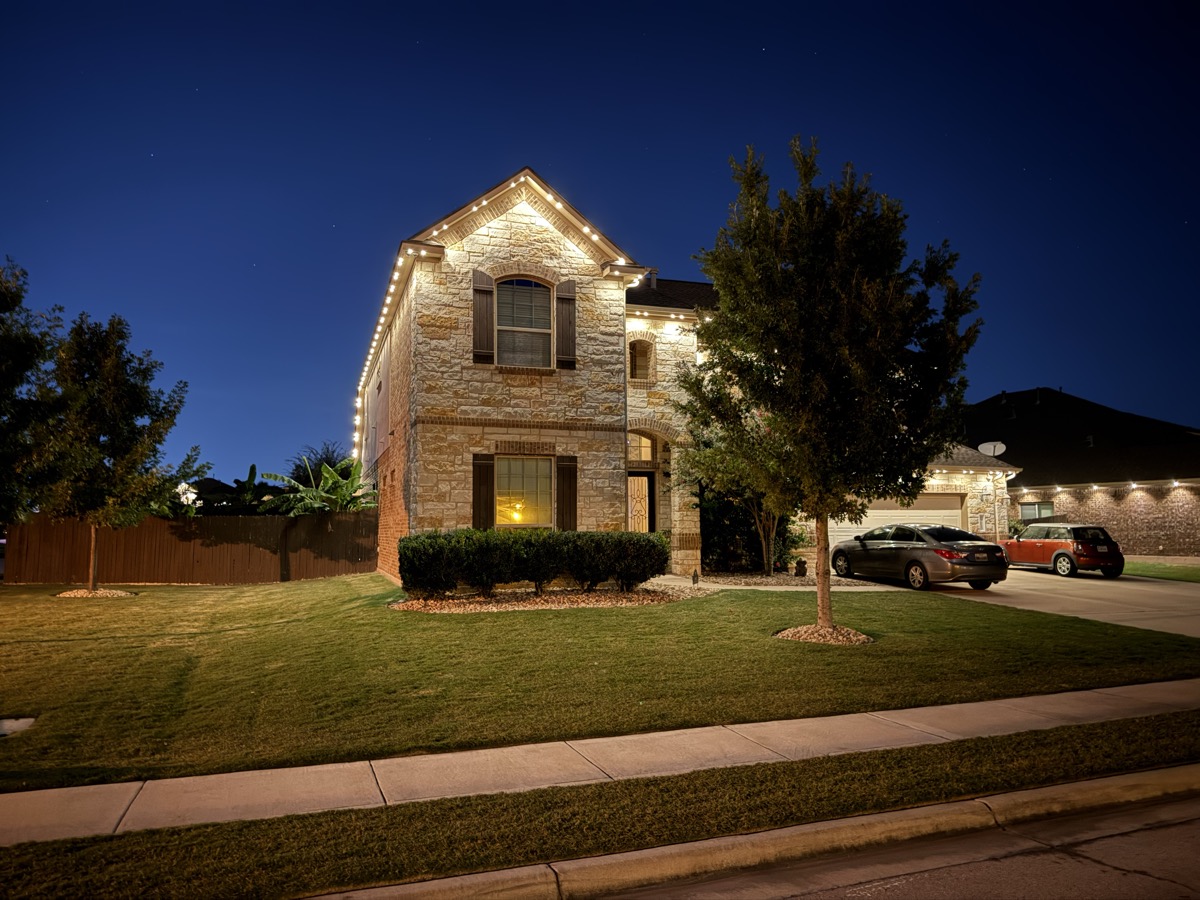
Permanent warm white lighting adding curb appeal to an Austin home at dusk

Permanent Outdoor Lighting and Home Resale Value: What Austin Buyers Are Looking For

April 4, 2026 · By Tom Porter, Owner of TruLight Austin

If you've sold a home in the Austin market over the last few years, you already know how fast things move. A listing goes live on a Thursday, the first round of showings fills up by Friday afternoon, and by Sunday evening there are multiple offers on the table. In neighborhoods like West Lake Hills, Lakeway, Barton Creek, and Circle C, the homes that attract the strongest offers tend to share something in common: they feel finished. Every detail has been handled. Nothing is left for the buyer to worry about.

Permanent outdoor lighting has quietly become one of those details. Not because it adds a line item on an appraisal sheet, but because it changes how a home presents, photographs, and feels during the exact hours when most serious Austin buyers are actually looking. And in a market where two comparable homes on the same street can draw very different offers, the home that shows better at 7:30 on a warm Tuesday evening has a measurable edge.

The Dusk Showing Advantage That Austin Sellers Keep Underestimating

A lot of Austin showings happen after work, especially when the weather is hot. Many serious buyers end up touring in the evening, which often means dusk showings during Austin's warmer months. It is partly weather.

From March through October, afternoon temperatures regularly push past 95 degrees. Buyers who work full-time aren't scheduling tours at 2:00 PM on a Wednesday. They're scheduling after work, after the worst of the heat breaks, during those golden-hour windows between 6:30 and 8:00 PM. Agents know this. The best listing agents in Austin specifically schedule open houses for late afternoon and early evening because that's when foot traffic peaks.

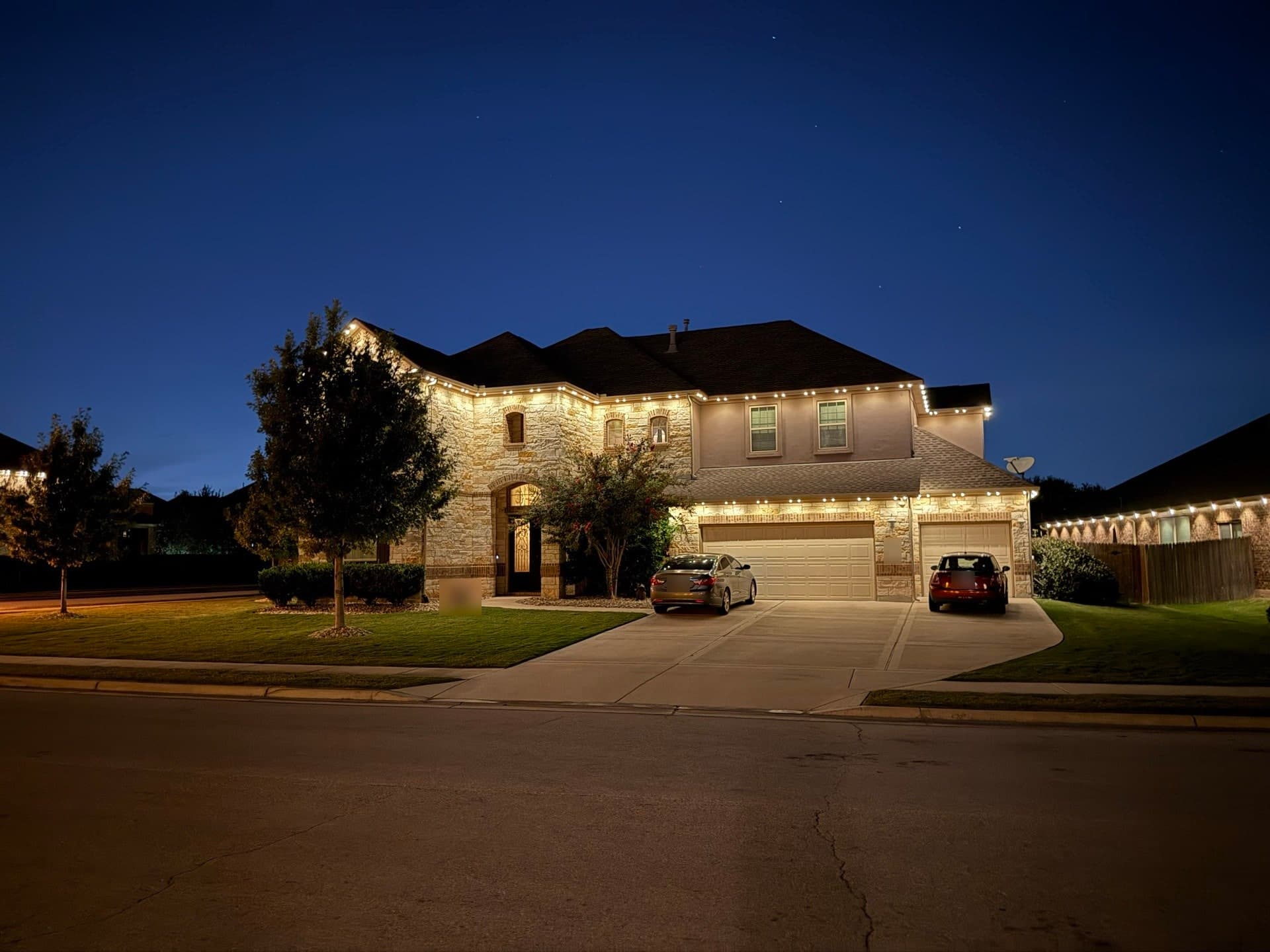
So think about what the buyer actually experiences. They pull up to the curb at 7:15 PM. The sun is low. The sky is shifting from gold to blue. And your home is either a dark silhouette against the fading light, or it's glowing. Warm white light tracing the roofline, picking up the texture of the limestone, making the entryway feel inviting before anyone touches the front door handle.

That first impression at the curb, in that specific light, at that specific time of day, does more for perceived value than a fresh coat of exterior paint or new mulch in the flower beds. And it's the one thing most sellers never think about because they're focused on what their home looks like at noon.

Permanent warm white lighting adding curb appeal to an Austin home at dusk

Listing Photography at Twilight Is Becoming the Standard

Five years ago, most Austin listing photos were shot in bright daylight. That's changed. Scroll through listings in Barton Creek, West Lake Hills, or Dripping Springs right now and you'll see a clear shift: the top-tier homes are being photographed at twilight. Interior lights on. Exterior lighting glowing. A deep blue sky behind the roofline. These dusk photos stop the scroll in a way that a flat midday shot simply cannot.

Real estate photographers in Austin have noticed the same thing. Twilight photos can make a listing stand out because the home looks closer to how buyers experience it during evening showings. The homes that photograph best at dusk are the ones with intentional exterior lighting, not just a porch light and a couple of path fixtures, but a full roofline system that gives the photographer something to work with.

A permanent LED lighting system gives the photographer clean rooflines, visible architecture, and a better dusk shot. It outlines the architecture, defines the roofline against the sky, and creates the kind of image that makes someone stop mid-scroll and tap "Schedule Tour." In Austin's spring selling season, when hundreds of new listings hit the market between February and June, that scroll-stopping power is worth real money.

And here's the part that makes permanent lighting different from staging or fresh landscaping: the lighting isn't a prop. The buyer who falls in love with that twilight listing photo is going to see the exact same thing when they pull up for their showing. What they saw online is what they get. That consistency between the listing image and the real experience builds trust before the front door even opens.

The Transferable Warranty That Buyers Don't Expect

The transferable warranty is the part most homeowners miss.

TruLight Austin's permanent lighting system comes with a lifetime transferable warranty. When the home sells, the warranty transfers to the new owner. The buyer inherits full coverage on a system rated for over 100,000 hours of operation. They don't need to worry about maintenance, replacement parts, or whether the system will hold up through Austin's brutal summers. It's covered. For life. And it follows the home, not the original owner.

For buyers shopping higher-priced homes in West Lake Hills, Lakeway, Circle C, and Barton Creek, a transferable warranty on a permanent fixture is genuinely unusual. Think about what else in a home comes with that kind of protection. The HVAC doesn't. The roof doesn't. The pool equipment doesn't. But the lighting system does. And hearing that the lighting coverage transfers with the home can make the feature feel less like an add-on and more like part of the property.

Listing agents who understand this will mention it in the property description and during showings. It's a quiet selling point that separates a home from the one down the street.

The Real Cost Math: Seasonal Lights vs. a Permanent System

One of the most common objections we hear is: "We just hire a holiday light company every year. It's fine." And look, it works. You get lights for six weeks, someone comes and takes them down, and you don't think about it again until next November. But the numbers are worth running, especially if you're thinking about resale value.

A typical seasonal lighting service in the Austin area costs between $400 and $1,200 per year depending on the size of the home and the scope of the installation. A large two-story in Lakeway or Barton Creek will be on the higher end. A single-story in Circle C or Dripping Springs might come in lower. But either way, you're writing that check every single year.

Over five years, that's $2,000 to $6,000 spent on lights you don't own, that come down every January, and that add zero permanent value to the property. Over ten years, it's $4,000 to $12,000. And all you have to show for it is a decade of receipts.

A permanent system from TruLight Austin is a one-time investment. It's installed in a single day. It runs year-round. When you sell, it stays with the property and gives the buyer one less exterior upgrade to price out. The system isn't seasonal decoration. It's a permanent improvement to the home, the same way a built-in outdoor kitchen or a custom fence is a permanent improvement.

The basic tradeoff is simple: seasonal lighting is a recurring expense. Permanent lighting stays with the home. Buyers understand the difference, and the ones shopping in Austin's top neighborhoods definitely understand it.

Aerial view of permanent lighting enhancing an Austin home's resale presentation

Security Perception and the Buyer's Peace of Mind

Even when buyers do not say it out loud, they notice how the property feels at night. It might not be the first thing they mention on a showing, but it's in the background of every walkthrough, especially on evening visits. They're looking at the approach to the front door. They're noticing whether the side yard is lit or pitch dark. They're glancing at the driveway and the garage entry.

A home with a fully lit perimeter reads as secure. It doesn't matter whether the crime rate in that specific neighborhood is low. What matters is the feeling: this home is well-lit, well-maintained, and not an easy target. That perception has real weight during a showing, and it's something that buyers register subconsciously even if they never say it out loud.

Wondering what it would cost for your home? Get an instant estimate using our satellite tool. No visit required.

Get Your Free Quote

TruLight Austin's system adds a layer here that traditional landscape lighting can't match. The system includes motion sensor capability, so specific zones can be programmed to brighten when movement is detected. A driveway approach that goes from warm ambient to full brightness when someone walks up isn't just a lighting feature. It's a security feature. And for buyers with families, especially those moving into neighborhoods farther out like Dripping Springs or south Lakeway where lots are larger and neighbors aren't as close, that built-in security lighting is a real comfort.

The entire system is controlled through an app, so the buyer can adjust schedules, brightness, color, and motion zones without ever calling a technician. For a generation of buyers who manage their thermostats, door locks, and security cameras from their phones, app-controlled exterior lighting fits right into how they already live.

The Neighborhood Effect: What Happens When Your Neighbors Get It First

This is where homeowners usually start paying attention. Drive through any established Austin neighborhood after dark, and you can see it happening in real time. One home on the street gets permanent lighting installed. It looks great. The neighbors notice. Within six months, two or three more homes on the same block have it. Within a year, it's becoming the standard for that street.

What this means for the homeowner who hasn't installed permanent lighting yet is that the comparison shifts. Your home isn't being compared against "no lighting" anymore. It's being compared against the homes on your street that do have it. And in that comparison, the home without intentional exterior lighting starts to look like the one that's been neglected, even if everything else about the property is beautifully maintained.

This is already visible in West Lake Hills and Barton Creek, where adoption of permanent lighting has grown noticeably over the past two to three years. It's spreading into Circle C, Dripping Springs, and the Lakeway communities. And the pattern is the same every time: once a critical mass of homes on a street or in a section have permanent lighting, the homes without it look dated by comparison.

If you're planning to sell in the next few years, the neighborhood effect is worth watching. Being ahead of the curve is a selling point. Being behind it is a liability.

The "One Less Thing" Factor That Closes Deals

Ask an Austin agent what buyers want at this price point and you will hear one word a lot: turnkey. Many buyers at the higher end of the Austin market are not looking for projects. They want to move in, set up their furniture, and live their life without a list of things that still need to be handled.

Features that remove future chores can make a home feel easier to buy. A permanent lighting system checks several boxes at once. The buyer doesn't need to research lighting companies. They don't need to get quotes. They don't need to schedule an installation. They don't need to deal with holiday lights ever again. They don't need to think about exterior security lighting. It's done. It's there. It works. The app is on their phone and the warranty is in their name.

That "one less thing to worry about" factor is hard to quantify on a spreadsheet, but agents who sell homes in Austin's premium neighborhoods will tell you it matters. Buyers who walk through a home and feel like everything has been handled are more likely to make a strong offer and less likely to negotiate aggressively on price. The home that feels finished gets treated differently than the one that still has a to-do list attached to it.

What TruLight Austin's System Actually Includes

For buyers (and sellers) who want to understand the specifics, here's what a TruLight Austin permanent lighting installation involves:

  • RGBW technology with 6 LEDs per node: Three RGB LEDs for full-spectrum color and three dedicated warm white LEDs for true white light. This is double the LED count of most competitors, which means more usable brightness than lower-output systems and no blue-tinted whites on your limestone or stucco.
  • 48-volt architecture: Designed to carry power efficiently across longer roofline runs than many lower-voltage systems. Lower current means less heat, longer component life, and better performance across long roofline runs.
  • 100,000+ hour rated lifespan: That's over 34 years of nightly operation. The rated lifespan is long enough that buyers can reasonably view it as a lasting home feature, not a seasonal add-on.
  • Lifetime transferable warranty: Covers the system for the life of the home, not just the original owner. When the home sells, the coverage follows.
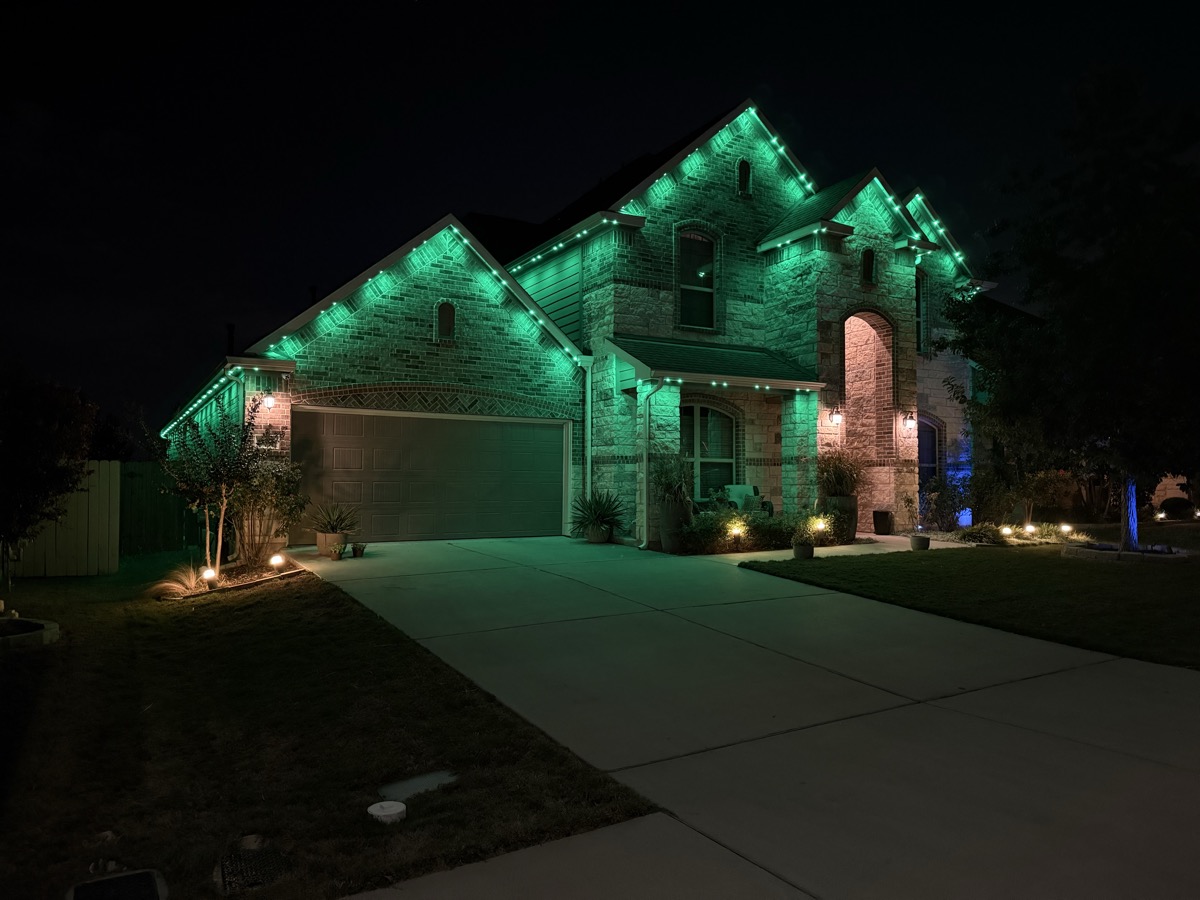
  • App control with motion sensor capability: Schedule lighting, adjust colors, set security zones, and control brightness from your phone. No timers, no switches, no calling a technician.
  • Single-day installation: Most homes are completed in one visit with no visible hardware during daylight hours. The system is designed to disappear into the architecture.

Frequently Asked Questions

Does permanent lighting actually increase my home's appraised value?

Appraisals are based on comparable sales, so a lighting system won't show up as a separate line item on an appraisal. What it does affect is how quickly your home sells and how strong the offers are. In Austin's market, where two similar homes in the same neighborhood can attract very different levels of interest, the home that shows better at dusk and photographs better at twilight has a real competitive advantage. That advantage shows up in the final sale price, even if it doesn't appear on the appraiser's form.

Is it worth installing if I'm planning to sell within a year?

Yes, for two reasons. First, you get to enjoy the system while you still own the home. Second, TruLight Austin typically completes installations in a single day, so the timeline is minimal. If you're listing during Austin's spring selling season (February through June), having permanent lighting installed before your listing photos are taken means your twilight shots will look dramatically better than comparable homes that only have a porch light and a couple of path fixtures.

Will buyers in my neighborhood actually care about this?

In Austin's premium neighborhoods, they already do. Buyers shopping in the $600K to $1.5M range expect homes to be turnkey. They notice details. And if other homes on your street or in your neighborhood have permanent lighting, the absence of it on your home is noticeable. You can already see the neighborhood effect in places like West Lake Hills, Barton Creek, Circle C, Lakeway, and Dripping Springs.

What about HOA restrictions?

Many Austin-area HOAs allow permanent architectural lighting when it meets brightness, color, and visibility rules, but approval depends on the community. TruLight Austin handles the HOA review process as part of every installation and is familiar with the requirements across Austin's major master-planned communities. We can help review the lighting plan against your HOA requirements before installation.

Related Articles

See What Your Austin Home Could Look Like

TruLight Austin installs permanent lighting throughout Central Texas, including West Lake Hills, Lakeway, Circle C, Barton Creek, Dripping Springs, Georgetown, Cedar Park, and surrounding communities. Most installations are completed in a single day and can be designed around different rooflines and architectural styles, and every system comes backed by a lifetime transferable warranty.

Curious what your home would look like with permanent lighting? Request a free, no-obligation quote and we'll show you exactly what the system looks like on your specific home before you commit to anything.

Ready to Light Up Your Home?

Use our light preview tool to see your home in warm white, holiday colors, and more. Then get your free instant quote.

Get Your Free Quote Instantly
Lighting & Home Resale Value | TruLight Austin