
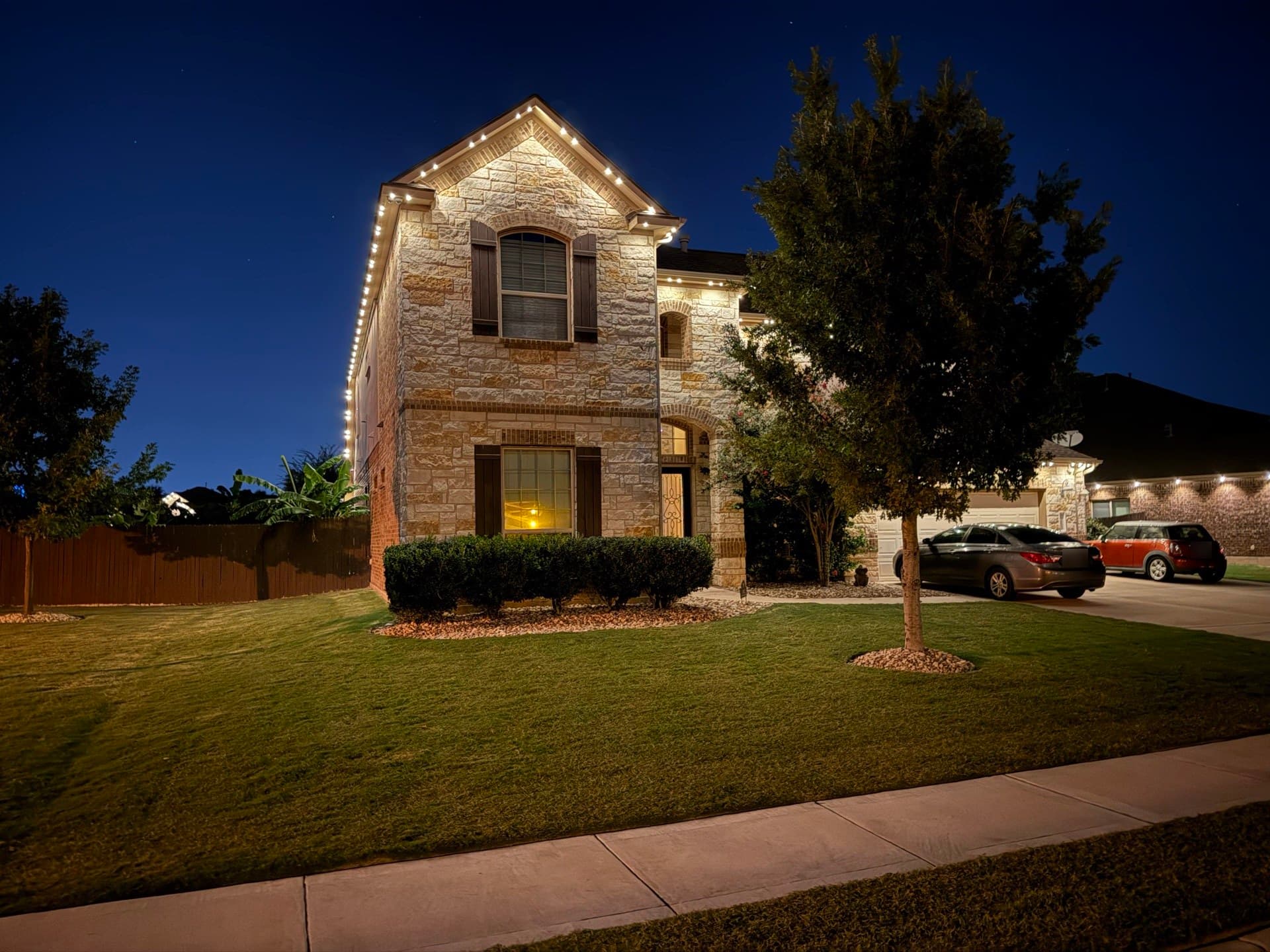
TruLight vs Trimlight: what Austin homeowners should compare
I co-own TruLight Austin and I have a financial interest in you choosing us, so weigh this comparison accordingly. What I can offer is where the published specifications actually differ, which differences matter on an Austin roofline, and the questions that make any bidder prove their claims in writing. The side by side version lives on our TruLight vs Trimlight comparison page.
Trimlight is one of the older names in this category. According to the Trimlight FAQ, the company started in the industry in 2010. Longevity is worth something, but it is a separate question from whether the system on your house is still the right one years from now.
What each company publishes about the light itself
Start by comparing how each light produces color and warm white. Trimlight's 3L product page, checked September 20, 2026, lists three LEDs, RGB, 12V and 6-, 9- or 12-inch spacing. Those details describe 3L, not every Trimlight product. Ask the dealer to name the bulb and controller in your quote.
TruLight runs a 48V low voltage system. Each RGBW node carries six LEDs: three RGB plus three dedicated warm white. Our published light rating is 100,000 hours. The system is professionally installed in color-matched aluminum track.
The dedicated warm white channel is the spec I would walk a homeowner over to look at. The 3L's RGB setup can mix red, green and blue to display a white-looking color; saying it cannot show white would be misleading. Where there is a separate warm white emitter, the white comes from an emitter built to make white. If you plan to run architectural white outside of a few holiday weeks, the color you prefer deserves a live comparison at your intended brightness. Ask every bidder, us included, to show you their warm white running at night on a real house before you sign.
What the hour ratings do and do not tell you
Trimlight's 3L page publishes 50,000+ bulb hours. We publish 100,000. In practice, hour ratings in this industry are manufacturer published figures measured under conditions the manufacturer defines, and companies do not necessarily define them the same way. Those numbers do not establish a two-to-one advantage in your driveway. An LED-hour rating also does not cover every component. Ask how connections, housings, and splices are protected, what the warranty covers if one of them fails, and who comes back when a node goes dark in year six.
Published specification comparison
| Item | TruLight (our published specs) | Trimlight 3L (per Trimlight's own pages) |
|---|---|---|
| System voltage | 48V low voltage | 12V, per the 3L specification |
| Emitter configuration | Six LEDs per RGBW node: three RGB plus three dedicated warm white | Three LEDs, RGB, per the 3L specification |
| Published light rating | 100,000 hours | 50,000+ bulb hours, per the 3L page; a manufacturer claim, not guaranteed repair-free system life |
| Mounting | Professionally installed color-matched aluminum track | Confirm channel material and finish options with your local Trimlight dealer |
| Product warranty | Current terms at /warranty | Coverage Trimlight labels lifetime, defined on its warranty page around the estimated lifespan of core components |
| Labor coverage | Current terms at /warranty | Trimlight states local dealers provide at least one year of labor coverage |
Every Trimlight figure above comes from Trimlight's own website and can change. Before signing, get the current written specification sheet and warranty from the local Trimlight dealer and read them yourself. Do the same with us.
Reading the coverage Trimlight labels lifetime
Trimlight's lifetime product warranty page defines lifetime coverage around the estimated lifespan of core components. It states that local dealers provide at least one year of labor coverage. It notes that labor or service fees may apply. It also contains Wi-Fi related exclusions.
Nothing about that structure is improper. Plenty of warranties in the trades read this way, and defining lifetime by component lifespan is a normal way to bound an open-ended promise. The point is that the headline word and the operative text answer different questions. The headline says the product is covered. The document says for how long, against what, and who pays to get a ladder on your house.
Compare these five items across every bidder and write the answers down:
- The covered duration for the product, stated as a number or as a defined term you can read.
- The covered duration for labor, and what happens in year two. Trimlight publishes a one year minimum for dealer labor coverage, so ask your local dealer in writing what they offer above that minimum.
- Service or trip fees during the covered period. Trimlight's warranty page notes labor or service fees may apply, so get the fee schedule.
- Exclusions. Trimlight's page includes Wi-Fi related exclusions. Every connected system depends on your home network, and every manufacturer draws that boundary somewhere. Find out where.
- Who honors the warranty if the dealer closes. It is an easy question to leave unasked, and the answer decides whether the coverage is worth anything to you.
Our current terms are published at /warranty. Hold us to the same five questions.
Compare app behavior on the quoted controller
Trimlight's current Edge app guide advertises zone control, including different colors and effects in separate areas. Ask both bidders to demonstrate the exact behavior you want on the quoted controller: warm white at the front, another effect at the back, and your preferred schedules. Confirm which settings run simultaneously. An old app-store rating or a blanket claim that a brand has no zoning does not answer that question.
Austin rooflines change the math
Wide single-story rooflines around Austin can create long runs, so ask each bidder for a property-specific layout. Deep eaves over limestone and stucco and elevations that carry heavy linear footage both change what the design has to account for, and neither shows up in a price per foot.
Run design and power delivery
You will hear voltage used as a shortcut in sales conversations. Higher system voltage does not automatically mean fewer power injection points. Run design depends on wire gauge, total load on the run, distance from the power source, the controller in use, and the manufacturer's own published limits. Two systems at the same voltage can perform very differently depending on those variables.
Instead of trusting a voltage number, make every bidder show you the design:
- A markup of your actual elevations with proposed run lengths.
- Where each power supply and injection point goes, and how it looks from the street.
- Wire gauge per run and the manufacturer's stated maximum run length at that gauge and load.
- What happens on the longest single run, which on a wide Hill Country elevation often decides the whole layout.
Heat, UV and daytime appearance
This product lives on your roofline year round in full Central Texas sun. Ask what the track and lens are made of and how the finish holds under sustained UV, and ask for the manufacturer's written statement rather than a verbal assurance. Ours is professionally installed color-matched aluminum track. Then look at the system in daylight. On limestone and stucco elevations the channel reads against a light background, so the daytime line is more visible than on dark fascia. Drive by an installed house from each bidder in daylight, not just at night.
Compare the same installed scope and price
Ask for matching front, side and rear coverage, with the controller, track finish, power layout, installation and app setup included. Use our TruLight installed price guide for current budget ranges and obtain a property-specific Trimlight quote from its local dealer. A price per foot is only useful when you know what work and equipment it includes.
How I would decide between close bids
- Who put a designed layout in writing instead of a linear-foot price.
- Who handed you the warranty document rather than describing it.
- Who named the exclusions before you asked.
- Who was clear about labor coverage in year two and beyond.
- Who you can reach when one node fails in December.
Trimlight dealers are independent businesses and they vary. Judge the local dealer as carefully as the brand, and do that with us too.
Sources
- Trimlight FAQ: 2010 industry start.
- Trimlight lifetime product warranty: lifetime defined around estimated lifespan of core components, at least one year of dealer labor coverage, labor or service fees may apply, Wi-Fi related exclusions.
- Trimlight 3L product page: current named-model hardware specifications. Trimlight Edge app guide: advertised zone control. Clickable manufacturer references are on our current Trimlight comparison page.
- TruLight: permanent lighting and /warranty.
Competitor sources were checked September 20, 2026. Manufacturer specifications and app descriptions are attributed claims, not independent tests. Confirm current written specifications and warranty terms with your local Trimlight dealer before deciding.
Related articles
Get a designed estimate
If you want a layout for your specific elevations rather than a price per foot, request an estimate. We will walk the roofline, mark the runs and injection points, and hand you the written warranty terms up front. Take that same document to every other bidder and compare line by line.
Ready to Light Up Your Home?
Use our light preview tool to see your home in warm white, holiday colors, and more. Then get your free instant quote.
Get Your Free Quote Instantly